Styrene

Styrene

Wednesday, December 10, 2014

Scratchbuilt Kalinin AK-1 model completed


Here is the scratchbuilt Kalinin AK-1 model completed.

For the posting of the step-by-step building process please go here in this same blog:

Since speculation is the mother of all philosophies, you will pardon me if I have speculated a bit regarding the colors of this plane.
As explained in the building article you can see illustrations of this plane in red, metal, green, grey and other colors. Fellow modeler Alain Bourret based his dark-blue/light-blue model on a color description given in a reputable aviation magazine.
Of the model on skis I made I have seen only one photograph. Besides the skis you may notice: there are no louvers of any kind on the cowl (too cold winters in Russia). The color on the fuselage an tail looks very dark on the B&W photo. The color of the wing is very light. We could safely assume the color of the nose was aluminum. There are no visible marks, registrations or any other inscription of any kind. It is not clear at which point in time this image was taken, if before receiving any markings, after one of the many repairs, etc.
I interpreted those "colors" the way I deemed reasonable.
The sort of lumbering appearance of the AK-1 is very appealing and reminds me a lot of Little Nemo in Slumberland for no particular reason.  I guess that's the way art works.


In taking the photos I noticed that there were items I had forgotten to add, so I added them and took additional photos:


Saturday, December 6, 2014

PANAGRA Fairchild FC-2W2 completed


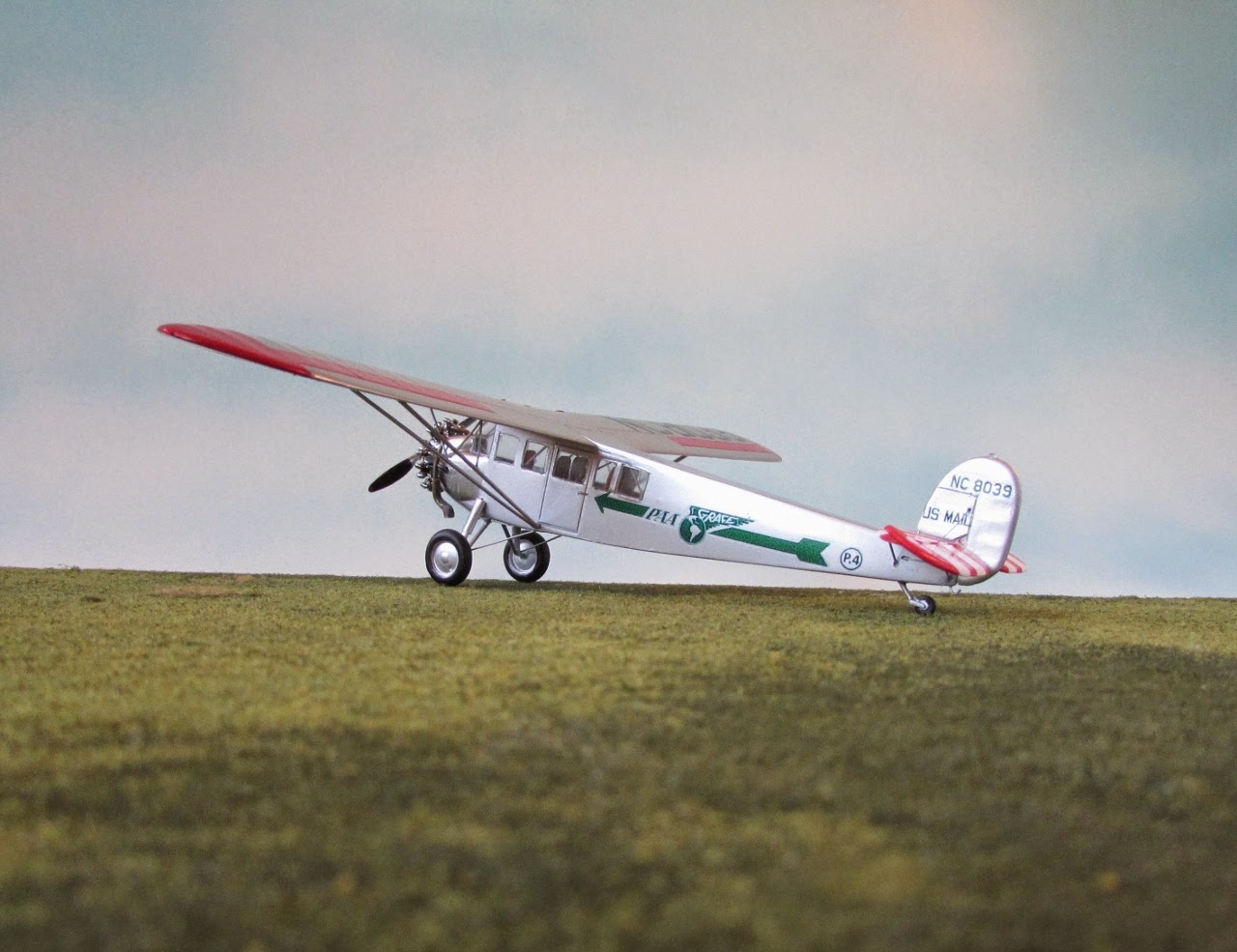
Here is the completed model of the PANAGRA Fairchild FC-2W2 that used to land in Buenos Aires.
The post depicting the step-by-step construction sequence is here:
This Vacuformed kit is from Khee-Kha Art Products in Alaska, and the decals are from Arctic Decals in Finland, so don't be surprised if you feel a geographical cold breeze while reading this.
There is one not very good photo showing extensive modifications on the fuselage with added windows. The same photos shows tail and wing bands (visual aids).
There is some debate about the PANAGRA colors at this time in South America, but one thing is clear: a green logo was used in South America whilst a blue one was being used in North America. Pan American Grace partnered with local capitals and its logo was many times "adapted" to reflect that. There is no doubt this Fairchild was painted mostly aluminum, but the stripes are a subject of some opinion exchange. PANAGRA much later in time used yellow bands with dark (possibly dark green) edges as a visual aid. These bands appear light in color in B&W photos. Instead, earlier machines seem to have had red bands in their wings and stabs, with no edges. These appear very dark in photos. It will make sense for these early planes to have that red visual/rescue aid, since they flew over "wild" territory in those early years, when aviation was not as developed. Red/aluminum would have made much more sense that yellow, a color not as effective against vegetation backgrounds. In some photos that portray these red bands on stabs, the areas between them appear white. Therefore that's what I used for these plane. Bear in mind that this very plane suffered many transformations along its career and wore different schemes, and that the plane depicted had these special bands on the wing tips and ahead of the ailerons, again as a visual/rescue aid.
Before being crashed and modified with the additional windows, this plane appears painted in something that renders almost black in B&W photos, showing a more common window configuration. I have seen only two images of it, one after a crash and another on an aerial view of the Moron Aerodrome in Argentina, both on the site which link was posted in the building article.